
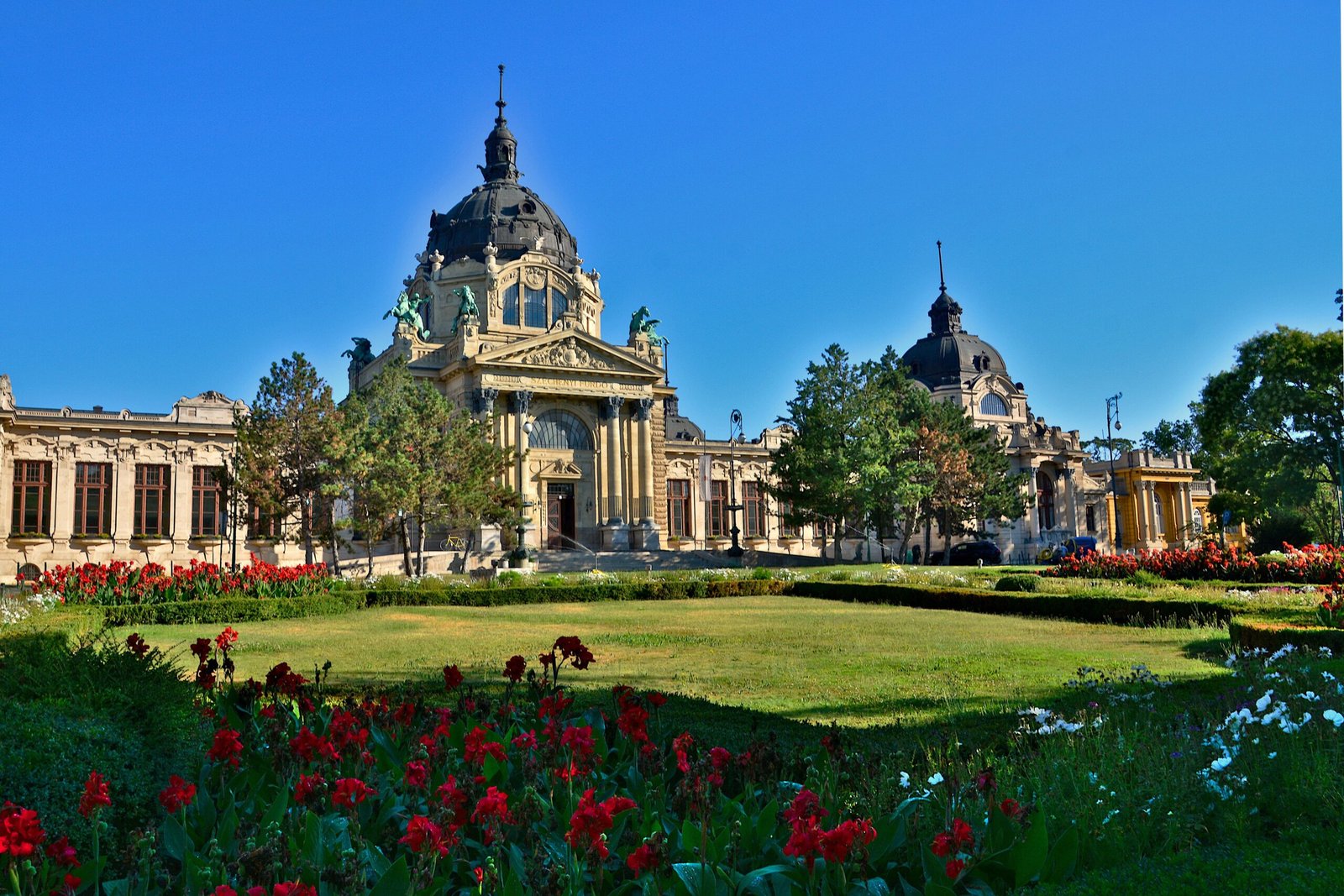
Széchenyi Baths in Budapest is the largest medicinal bath in Europe and the easiest one for first-time visitors. A full-day ticket with a locker costs 13,200 HUF on weekdays and 14,800 HUF from Friday to Sunday in 2026. It opens at 7 am on weekdays, and the M1 metro stops at the door.
This post contains affiliate links. If you book through them, we may earn a small commission at no extra cost to you.
Széchenyi does not sell timed entry, so a ticket does not save you a queue — it saves you the desk. Compare Széchenyi ticket options for your dates →
How much does Széchenyi Baths in Budapest cost in 2026?
A standard full-day ticket with a locker is 13,200 HUF Monday to Thursday, 14,800 HUF Friday to Sunday, and 15,800 HUF on holidays and in peak season. A private changing cabin adds 1,000 HUF. Note that Friday counts as a weekend day here, which catches people out.
| Ticket | Mon–Thu | Fri–Sun | Holidays / peak |
|---|---|---|---|
| “Good morning Budapest” (entry until 9 am) | 10,500 HUF | 11,800 HUF (Fri only) | – |
| Daily ticket with locker | 13,200 HUF | 14,800 HUF | 15,800 HUF |
| Fast Track with locker (online only) | 15,200 HUF | 16,800 HUF | 17,800 HUF |
| Cabin instead of locker | +1,000 HUF | +1,000 HUF | +1,000 HUF |
The cheapest way in is the “Good morning Budapest” ticket at 10,500 HUF, which requires you to enter before 9 am on a weekday. That is also when the baths are quietest, so the cheapest ticket is the best experience — an unusual overlap worth planning around.
A Budapest Card gets you a discount on daily tickets with locker. Prices are set by the bath itself and published in full on the official Széchenyi price list.
What are the opening hours of Széchenyi Baths?
The bath opens at 7 am Monday to Friday and 8 am at weekends, closing at 8 pm on most days. Friday is the exception: it stays open until 10 pm. Pool areas must be vacated 20 minutes before closing, and the cash desks shut a full hour before that.
| Day | Bath open | Pools, saunas, steam rooms |
|---|---|---|
| Monday–Thursday | 07:00–20:00 | 07:00–19:40 |
| Friday | 07:00–22:00 | 07:00–21:40 |
| Saturday–Sunday | 08:00–20:00 | 08:00–19:40 |
The ticket desks close an hour before the bath does — 19:00 Monday to Thursday and at weekends, 21:00 on Friday — and the pool areas have to be cleared 20 minutes before closing time. Turning up at 19:30 on a Tuesday means you will not get in. Checked August 2026.
Holiday and peak-season dates open at 8 am. Because the schedule shifts around Christmas and New Year, check the official opening hours before travelling on a public holiday.
What is inside Széchenyi Baths?
Széchenyi has 18 pools in total — 15 indoors and three outdoors — plus saunas, steam rooms and hot air chambers. The three outdoor pools are the ones in every photograph: a warm thermal pool, a cooler swimming pool and a whirlpool that spins bathers in a circle. Everything runs on water from the bath’s own thermal wells.
The building is the other half of the appeal. It opened in 1913 in a Neo-Baroque style, painted a distinctive mustard yellow, and it sits inside City Park rather than on a street corner. The outdoor pools stay open all year, which is why the winter photographs of steam rising around bathers are the ones that travel.
The chess boards in the outdoor thermal pool are real, not a tourist stunt. Locals have played there for decades, and they are still there most mornings.
Which ticket should you buy?
Buy the “Good morning Budapest” ticket if you can be there before 9 am on a weekday — it is the cheapest and the quietest. Otherwise buy a standard daily ticket with a locker online. Only pay for Fast Track if you are arriving at a peak time in summer, when the entrance queue genuinely stretches.
The locker-versus-cabin question is simpler than it looks. A locker is a large box in a shared changing area; a cabin is a small private room you can change and store things in. For 1,000 HUF, a cabin is worth it if you are travelling as a couple or want somewhere private to change.
One thing worth knowing before you pack: Széchenyi does not currently rent towels, swimwear or slippers. You can buy them on site, but a towel costs 6,900 HUF and a swim cap 2,100 HUF, so bringing your own saves real money.
Buying ahead: Széchenyi sells skip-the-line day passes through GetYourGuide, usually with free cancellation up to 24 hours before. It is worth it on summer weekends and over Christmas and New Year, when the on-site queue can run 30–40 minutes; on a winter weekday you can walk up. Check Széchenyi tickets and prices →
How do you get to Széchenyi Baths?
Take the M1 metro to Széchenyi fürdő station, which comes up almost at the entrance. The M1 is the oldest underground line in continental Europe and runs the length of Andrássy út, so it is a short, direct ride from most central hotels. Trolleybus 72 also stops nearby.
The address is Állatkerti körút 9-11 in District XIV. There are two entrances: the main one on Állatkerti körút and a second opposite the Circus, where walk-in tickets are sold by card only. If you booked online, use the entrance stated on your ticket.
When is the best time to visit Széchenyi Baths?
Weekday mornings, without much competition. The bath opens at 7 am Monday to Thursday, the “Good morning Budapest” ticket is cheapest then, and you will have the outdoor pools close to yourself for the first hour. Weekend afternoons in summer are the opposite: crowded, hot and slow to get into.
Winter is the better season overall. The outdoor pools stay open year-round, and the contrast between freezing air and 38°C water is what makes Széchenyi memorable rather than merely pleasant. Snow on the Neo-Baroque roofline is a bonus.
What should you bring to Széchenyi Baths?
Bring swimwear, a towel, flip-flops and a swimming cap if you plan to use the lap pool. Since the bath no longer rents any of these, forgetting them means buying replacements at gift-shop prices. A waterproof phone pouch is worth it if you want photos in the outdoor pools.
- Swimwear — no rental service, 6,300 HUF to buy on site
- Towel — no rental, 6,900 HUF on site
- Flip-flops — wet stone is slippery and cold
- Swim cap — required in the swimming pool, 2,100 HUF on site
- A bag you don’t mind carrying damp
- No padlock needed — your wristband opens the locker
Is Széchenyi worth it compared to the other baths?
Yes for a first visit, less so for a second. Széchenyi is the largest, the most photogenic and the easiest to navigate, but it is also the busiest and the most expensive of Budapest’s three main baths. Rudas is calmer with a rooftop pool, and Lukács is markedly cheaper and more local in feel.
For the full comparison by price, crowds and atmosphere, see our ranked guide to the best thermal baths in Budapest, or start from our guide to the thermal baths in Hungary. To build a half-day around your visit, see what to do near the baths.
If Széchenyi is the one you have settled on, the practical step is to check what is actually available on your dates — ticket types and any packages change with the season. See current Széchenyi options and prices →
Frequently Asked Questions
How much is a ticket to Széchenyi Baths in 2026?
A full-day ticket with a locker costs 13,200 HUF Monday to Thursday and 14,800 HUF Friday to Sunday. Holidays and peak season cost 15,800 HUF. A cabin instead of a locker adds 1,000 HUF.
What time does Széchenyi Baths open?
It opens at 7 am Monday to Friday and 8 am at weekends. Closing is 8 pm on most days, but 10 pm on Fridays. Pool areas must be left 20 minutes before closing.
Can you rent a towel at Széchenyi Baths?
No. The bath does not currently offer a rental service. Towels, swimwear, swim caps and slippers can be bought on site, but they are expensive, so bring your own.
Is Széchenyi Baths open in winter?
Yes, all year. The three outdoor pools stay open through winter, and bathing in them while snow falls is the experience most visitors remember.
How do you get to Széchenyi Baths by metro?
Take the M1 (yellow) line to Széchenyi fürdő station. It runs under Andrássy út from the city centre and the station exit is beside the bath entrance.
Last updated: August 2026.