
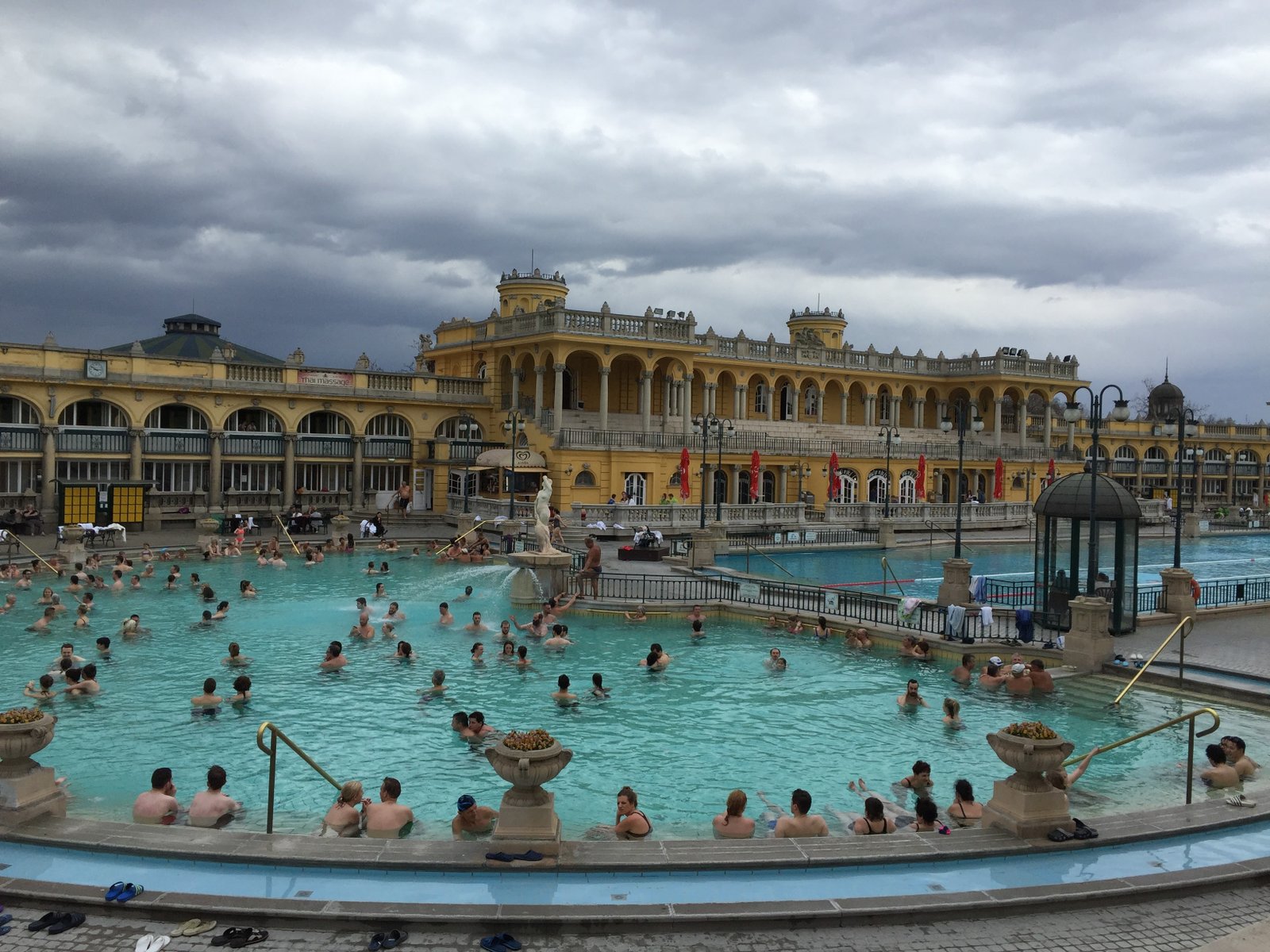
Hungary is home to more than 100 natural thermal baths, with Budapest’s Széchenyi, Rudas, and Gellért among Europe’s most famous. This guide ranks the best thermal baths in Hungary by price, crowds, and vibe, and covers etiquette, timing, and how to pick the right bath for your trip — updated for 2026.
What makes the thermal baths in Hungary special?
Hungary sits on one of Europe’s richest networks of geothermal springs, feeding more than 100 thermal baths across the country. Budapest alone has over a dozen, ranging from Ottoman-era Turkish baths to grand Neo-Baroque bathhouses like Széchenyi. Locals use them year-round for relaxation and health, not just tourism — most outdoor pools stay open through winter, when steam rising off the water is part of the experience.
How do Budapest’s baths fit into a Hungary trip?
Budapest has the largest concentration of thermal baths in Hungary, and three stand out for first-time visitors: Széchenyi (the largest and most iconic), Rudas (a historic Turkish bath with rooftop views), and Lukács (a quieter, more local alternative). Gellért, once a top pick, closed for renovation in October 2025 and won’t reopen until 2028.

Prices, opening hours, crowd levels and a side-by-side comparison of Széchenyi, Rudas and Lukács live in the dedicated Budapest guide: Best Thermal Baths in Budapest: The Complete 2026 Ranked Guide.
Which thermal baths are worth visiting outside Budapest?
Budapest isn’t the only place to soak. Three destinations stand out for a day trip or an overnight stay: Hévíz, home to the world’s largest natural thermal lake; Bükfürdő, a modern medicinal spa park near the Austrian border; and Eger, which pairs a historic Turkish bath with a cave bath carved into the hillside.
- Hévíz — home to the world’s largest natural thermal lake, warm enough to swim in year-round
- Bükfürdő — a modern medicinal thermal park near the Austrian border, popular for wellness breaks
- Eger — a historic Turkish bath plus a unique cave bath carved into the hillside
Detailed guides for each of these are coming soon — check back or follow us on social media for updates.
How do you choose the right thermal bath?
Match the bath to your trip rather than the rankings. First-time visitors should start with Széchenyi, couples and anyone wanting quiet are better off at Rudas or Lukács, families need a bath with dedicated swimming pools, and travellers on a budget will find Lukács and the baths outside Budapest noticeably cheaper.
- First-time visitor? Start with Széchenyi — it’s the easiest to navigate and the most photographed.
- Couple or quiet soak? Rudas or Lukács are calmer and less crowded.
- Traveling with children? Széchenyi, Rudas and Lukács all enforce a 14+ age minimum. For younger children, Palatinus on Margaret Island is the summer alternative.
- On a tight budget? Lukács is roughly half the price of Széchenyi, and the baths outside Budapest, such as those in Eger, are cheaper again.
What should you know before visiting a thermal bath?
Bring your own swimwear, a towel and flip-flops, because rentals run out and wet stone floors are slippery. Some baths require a bathing cap in the swimming pools. Book online in advance where you can: it skips the entrance queue and is often cheaper than paying at the door.
- Bring your own swimwear — not all baths rent it, and rental options can run out
- Bathing caps are required in swimming pools at some baths; they’re usually available to rent or buy on site
- Book tickets online in advance where possible — it skips the entrance line and can be cheaper
- Weekday mornings are the quietest time to visit; weekends get busy fast
- Bring flip-flops — wet stone floors get slippery
New to Hungarian baths? Start with Budapest thermal bath etiquette — what to wear, when a cap is required and how the changing cabins work.
Frequently Asked Questions
How many thermal baths are there in Hungary?
Hungary has more than 100 thermal baths, with the highest concentration in and around Budapest.
Which Hungarian thermal baths are worth leaving Budapest for?
Hévíz has the world’s largest natural thermal lake, Miskolctapolca is built into a cave system, and Egerszalók sits on a terraced salt hill. Szeged’s Anna Baths is the easiest of them to reach from Budapest.
How much does a thermal bath cost in Hungary outside Budapest?
Countryside baths are consistently cheaper than the capital’s. Szeged’s Anna Baths is 4,200 HUF for a day ticket, against 7,000–13,200 HUF for the three main Budapest baths. Check each bath’s own price list before you travel.
Can you visit a Hungarian thermal bath as a day trip from Budapest?
Yes. Szeged is 2h20 by train each way, which makes Anna Baths the easiest. Eger and Miskolctapolca also work as long days, while Hévíz is far enough west that an overnight is more comfortable.
Pair your bath visit with the right base — see our guide to where to stay in Budapest for hotels near the baths that matter most to you.
Last updated: August 2026. This page contains affiliate links; we may earn a commission at no extra cost to you if you book through them.
More Thermal Bath Guides
- Hévíz Day Trip From Budapest: An Honest 2026 Guide to the Thermal Lake
 How to get from Budapest to Lake Hévíz and back in a day, what the 2026 tickets cost, and what is closed at the lake bath.
 - Hotels Near Széchenyi Baths: 2026 Picks by Walking Time
 Nine hotels within walking distance or a short M1 ride of Széchenyi Baths, ranked by walking time, with the trade-offs of each.
 - Turkish Baths in Budapest (2026): Rudas and Veli Bej Are Open, Király and Rác Are Not
 Budapest has four Ottoman-era Turkish baths, but only Rudas and Veli Bej are open in 2026. Prices, opening hours and single-sex sessions, checked against official sources.
 - Király Baths Budapest: Closed Since 2020 – and the Turkish Baths to Visit Instead
 Király Baths has been closed since 15 March 2020 and has no reopening date. Here is why, where the renovation stands in 2026, and the Turkish baths you can visit instead.