
This post contains affiliate links. If you book through them we may earn a small commission at no extra cost to you.
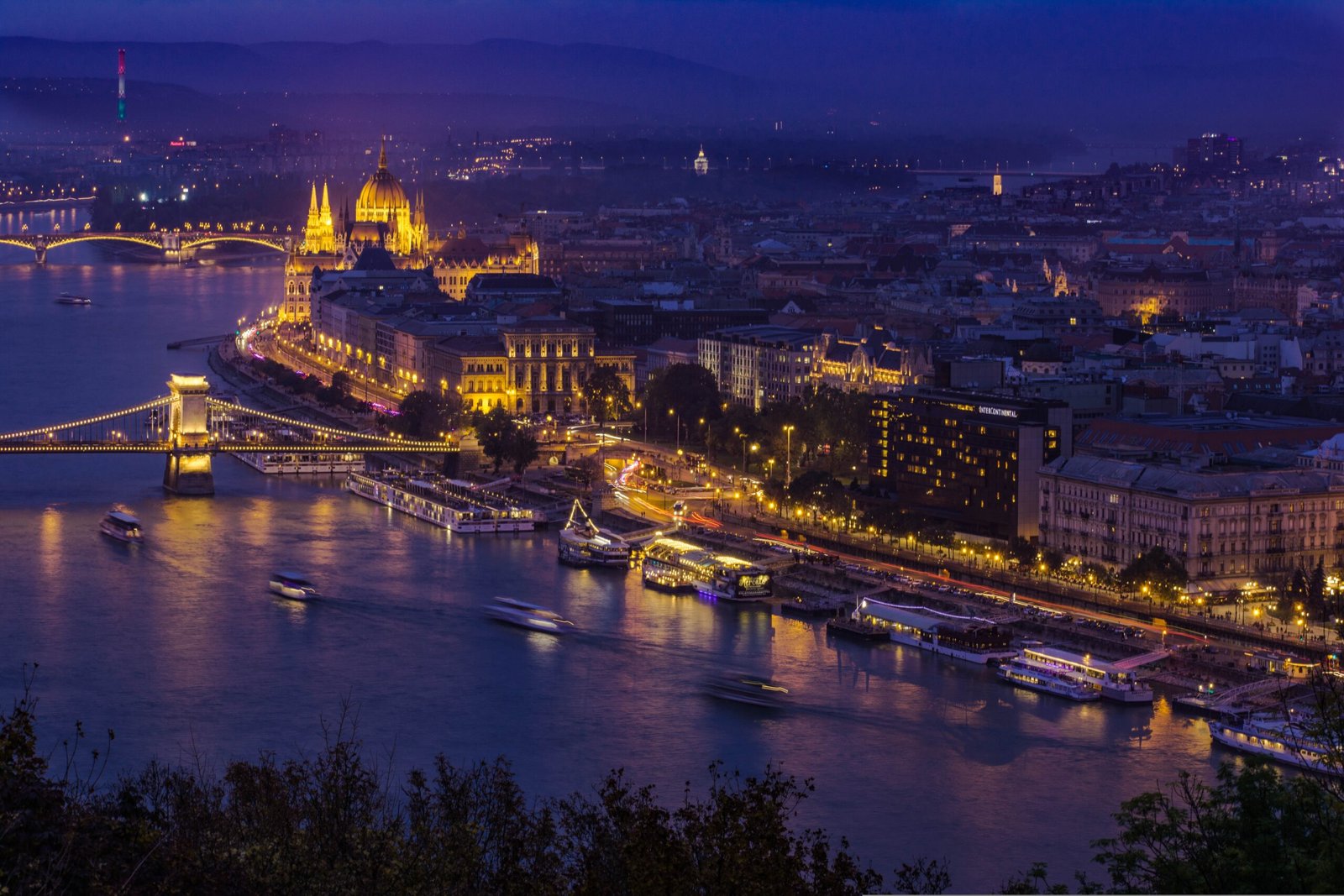
This Budapest 3-day itinerary gives you Pest’s grand boulevards on day one, Buda’s Castle Hill on day two, and a full thermal bath morning on day three. Three days is enough to see the city’s highlights without rushing, and the whole plan runs on a single 72-hour transport pass costing 5,750 HUF (about €16).
What does this Budapest 3-day itinerary cover?
The plan below is built around one principle: cluster your days geographically so you are never crossing the Danube more than once a day. Budapest’s centre is compact, and most of the walking is flat on the Pest side.
| Day | Area | Highlights | Walking |
|---|---|---|---|
| Day 1 | Pest | Parliament, St Stephen’s Basilica, Andrássy Avenue, Jewish Quarter | ~6 km |
| Day 2 | Buda | Castle Hill, Fisherman’s Bastion, Matthias Church, Gellért Hill | ~7 km, uphill |
| Day 3 | City Park + Danube | Széchenyi Baths, Heroes’ Square, evening river cruise | ~4 km |
If you only have two days, drop day three’s afternoon and move the baths to your first evening — the outdoor pools are open late and are at their best after dark.
Day 1 — Where should you start in Pest?
Start at Kossuth Lajos Square in front of the Parliament, ideally on a 9:00 or 10:00 tour slot. The Parliament is only visitable on a timed guided tour, tours regularly sell out one to three weeks ahead in summer, and there is no walk-in ticket desk for advance sales — book online first, then build the rest of the day around your slot.
Since 1 January 2026 the standard 45-minute tour costs 7,000 HUF for EEA adults and 14,000 HUF for non-EEA adults, with student rates for ages 6–24 and free entry under 6. Bring your passport or EU ID: staff do check eligibility, and claiming the EEA rate without documents means paying the difference on the spot.
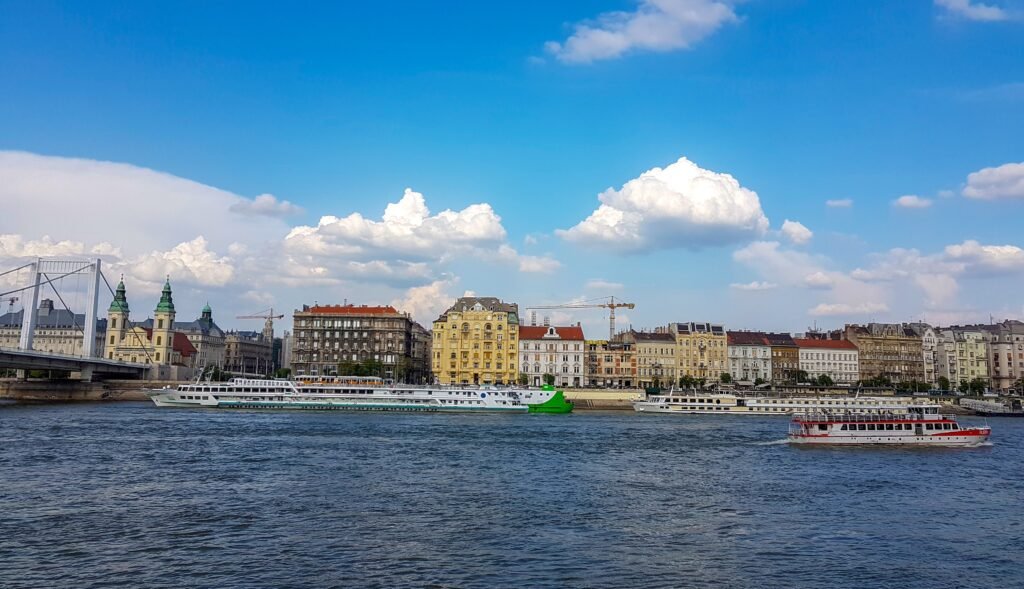
From Parliament, walk south along the river to the Shoes on the Danube Bank memorial, then inland to St Stephen’s Basilica. Climb the dome if the queue is short — it is the best cheap view in Pest. Spend the afternoon walking Andrássy Avenue up towards the Opera House, then loop back down into District VII.
Evening: the Jewish Quarter’s ruin bars. Szimpla Kert is the famous one and worth seeing once, but the smaller courtyards on Kazinczy and Dob streets are where locals actually drink. Order at the bar, check the price before you accept a table, and read our Budapest safety guide if you plan a late night out.
Day 2 — How do you spend a day in Buda?
Cross to Buda in the morning and go up first, down later — the climb is far easier before the afternoon heat. Take the Chain Bridge on foot, then either the funicular or the stepped path up to Castle Hill.
Castle Hill holds Buda Castle (housing the Hungarian National Gallery and Budapest History Museum), Matthias Church, and Fisherman’s Bastion. The Bastion’s lower terraces are free to walk; only the upper towers charge admission, and the view from the free level is nearly identical. Go before 9:00 or after 18:00 if you want photographs without crowds.
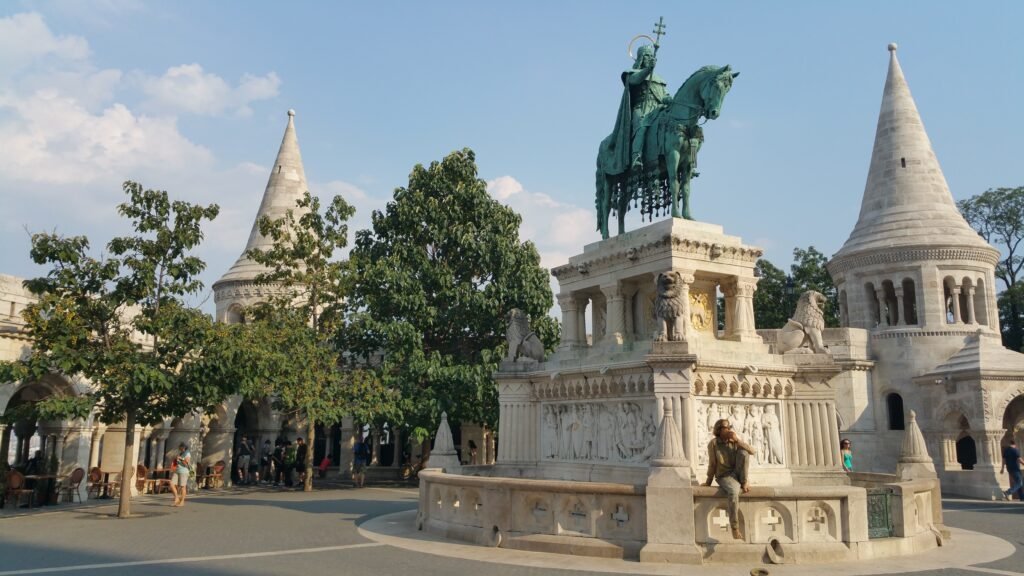
Walk south along the ridge in the afternoon towards Gellért Hill. The climb to the Citadella takes about 20 minutes from the base and delivers the single best panorama of the city. Note that the Gellért Baths at the foot of the hill are closed for renovation until a planned 2028 reopening — the building is worth looking at from Szent Gellért tér, but do not pack a swimsuit for it.
Evening: dinner on the Buda side near Bartók Béla Boulevard, which has better value than the Castle District’s tourist restaurants.
Day 3 — When is the best time to visit the thermal baths?
Arrive at Széchenyi Baths at opening, around 7:00–9:00, when the outdoor pools are quiet and steam still hangs over the water. By 11:00 the complex fills up and stays busy until closing. A weekday ticket runs about 13,200 HUF; weekend rates are higher. Book online rather than queueing at the window.
Széchenyi is in City Park, so your morning and afternoon are already planned: the baths, then Heroes’ Square and Vajdahunyad Castle a five-minute walk away. If you would rather compare your options before committing, our ranked guide to Budapest’s best thermal baths covers Rudas, Lukács and Veli Bej too, and the complete Széchenyi guide has the full pricing and opening-hours picture.
First time in a Hungarian bath? Read the thermal bath etiquette guide before you go — the rules around swim caps, sandals and photography catch out a lot of visitors.
Evening: an evening Danube cruise. The Parliament and Castle floodlighting is the one genuinely unmissable Budapest sight, and an hour on the water costs less than most rooftop bars. Compare evening cruises and skip-the-line tickets →
How much does a Budapest 3-day itinerary cost?
Per person, excluding accommodation and using a rate of roughly 360 HUF to €1:
| Item | Cost (HUF) | Approx. € |
|---|---|---|
| 72-hour transport pass | 5,750 | €16 |
| Parliament tour (non-EEA adult) | 14,000 | €39 |
| Széchenyi Baths, weekday | 13,200 | €37 |
| Evening Danube cruise | 8,000–15,000 | €22–42 |
| Food, 3 days, mid-range | 30,000–45,000 | €83–125 |
| Total, excluding hotel | ~71,000–93,000 | €197–259 |
The Budapest Card is a separate product and, since 1 May 2026, an expensive one: 29,990 HUF for the 72-hour version. It only pays off if you plan on several paid museums per day. For this itinerary, a plain 72-hour BKK travelcard plus individually bought tickets works out considerably cheaper.
How should you get around Budapest in three days?
Buy a 72-hour Budapest travelcard for 5,750 HUF and use it on every metro, tram, bus and trolleybus in the city. A single ticket costs 500 HUF (700 HUF if bought on board), so the pass pays for itself at roughly four journeys a day. Current fares are published on the official BKK price list.
Two warnings worth more than they look. First, the airport shuttle bus needs its own 2,500 HUF ticket — no travelcard covers it, though a 1,000 HUF add-on ticket exists if you already hold a valid pass. Second, riding without a valid ticket carries a 12,000 HUF on-the-spot penalty that rises to 25,000 HUF if you delay payment. Inspectors work the metro escalators daily and they are not negotiable.
Trams 2, 4 and 6 are the useful ones for visitors. Tram 2 runs along the Pest riverbank and is effectively a free sightseeing route with your pass.
Where should you stay for this itinerary?
District V (Belváros) puts you within walking distance of both day one and day three, and one bridge from day two. District VI and VII are cheaper and better for nightlife, at the cost of noise. District I in Buda is quiet and scenic but adds a climb to every return trip.
Our full where to stay in Budapest guide breaks the districts down by traveller type. If you are considering a short-term rental rather than a hotel, read the 2026 Airbnb rules update first — District VIII has already voted to restrict short-term lets from 1 January 2027, and other districts may follow.
Search Budapest hotels for your dates →
Frequently asked questions Budapest 3-Day Itinerary
Is 3 days enough for Budapest?
Yes, for a first visit. Three days covers Parliament, Castle Hill, the Jewish Quarter and one thermal bath at a comfortable pace. A fourth day would let you add Margaret Island or a day trip to Szentendre.
What is the best month for a Budapest 3-day itinerary?
May, June and September give the best balance of weather and crowds. Our month-by-month guide to the best time to visit Hungary has the full picture.
Do I need to book the Parliament tour in advance?
Yes. Tours are timed, limited and frequently sell out one to three weeks ahead between April and October. Book through the official ticketing partner rather than a reseller.
Can I visit Gellért Baths in 2026?
No. Gellért closed on 1 October 2025 for a major restoration, with reopening planned for 2028. Rudas is the nearest working alternative.
Is Budapest walkable?
The Pest side is flat and very walkable. Buda involves real climbing. This itinerary averages 5–7 km a day, so bring shoes you can walk hills in.