
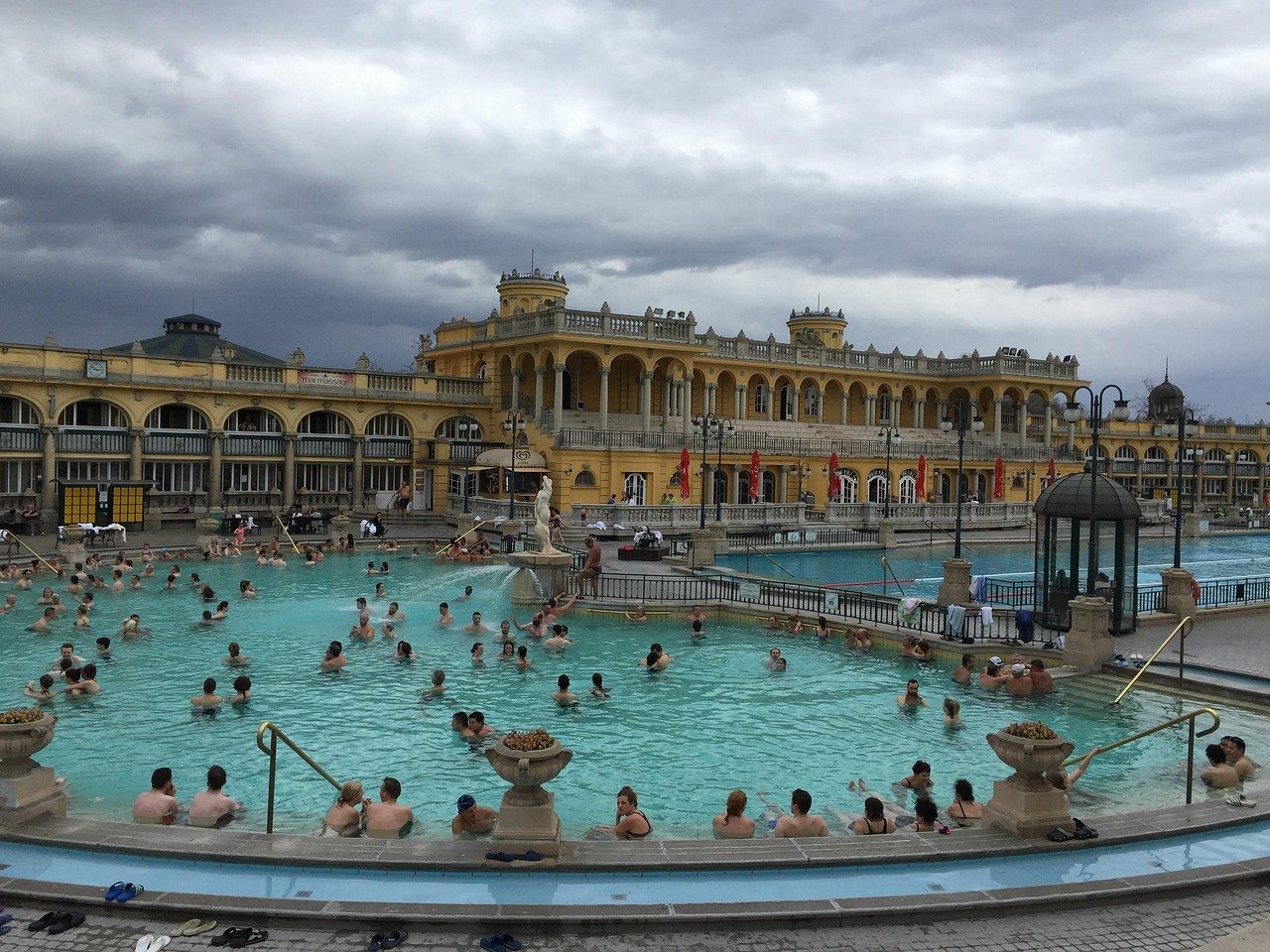
Autumn is the best season to visit Budapest’s thermal baths. From late September the air drops below 15°C while the outdoor pools stay at 38°C, which is the combination the summer crowds never get. September is warm and busy, October is mild and quiet, November is cold and cheap. If you can only pick one month, pick October.
This post contains affiliate links. If you book through them we may earn a small commission at no extra cost to you.
Last verified: August 2026. Gellért Baths remain closed for renovation until around 2028. Budapest taxi tariffs rose in August 2026 — most English-language guides still quote the old rate.
What is the weather like in Budapest in autumn?
Budapest’s autumn splits into three distinct months, not one season. September still feels like summer. November already feels like winter. October sits between them and is the month most visitors are actually looking for.
| Month | Average high | Average low | Rainy days | What it feels like |
|---|---|---|---|---|
| September | 23°C | 13°C | 6–7 | Late summer, outdoor terraces still open |
| October | 16°C | 8°C | 6–7 | Crisp days, cold evenings, peak foliage |
| November | 8°C | 2°C | 8–9 | Grey, damp, dark by 16:30 |
Daylight shrinks fast. In early September the sun sets around 19:30; by late November it is dark before 16:30. Plan sightseeing for mornings and baths for late afternoon, not the other way round.

Are Budapest’s thermal baths better in autumn?
Yes, and it is not close. The outdoor pools at Széchenyi are heated to 38°C year-round. In August, sitting in 38°C water when the air is 32°C is unpleasant. In October, when the air is 12°C and steam is rising off the surface, it is the reason people come to Budapest in the first place.
Autumn also thins the crowds. August queues at the Széchenyi cashier regularly run 20–30 minutes; by mid-October you can usually walk in on a weekday morning.
Pre-book if you are going at a weekend. A GetYourGuide Széchenyi ticket includes a private changing cabin and the Help Desk entrance, which skips the ticket queue entirely. On a wet October Saturday that queue is outdoors. Check Széchenyi ticket options and prices
Which bath should you choose in autumn?
The choice matters more in autumn than in summer, because two of the three have significant outdoor space and one does not.
| Bath | Weekday ticket | Outdoor pools | Best for in autumn |
|---|---|---|---|
| Széchenyi | 13,200 HUF (~€33) | 3, heated year-round | First visit, the steam-and-cold-air experience |
| Rudas | 12,000 HUF (~€30) | Rooftop pool, Danube views | Sunset soaks, quieter, check gendered days |
| Lukács | 7,000 HUF (~€18) | 2 outdoor pools | Budget, locals, no queues at all |
| Gellért | Closed | — | Closed since October 2025, reopening ~2028 |
Prices checked August 2026 at gate rates with a locker. Weekend rates run roughly 1,500–2,500 HUF higher.
Széchenyi is the obvious autumn pick and deserves the reputation. Rudas is the better call if you want the rooftop pool at dusk — but check the schedule before you go, because the Turkish section runs men-only and women-only days, and the rooftop pool is mixed. Lukács is where you go if you have already done Széchenyi.
One honest note on Rudas: GetYourGuide does not sell a plain Rudas entry ticket. It sells a bath-plus-dinner package that costs several times the gate price. For a normal visit, or for the Friday and Saturday night bathing sessions (22:00–03:00), book direct at tickets.rudasfurdo.hu. We earn nothing on that link and it is still the right advice.
What festivals are on in Budapest in autumn 2026?
Autumn is Budapest’s densest cultural season. The wine festival is the one worth planning a trip around.
| Event | Dates | Where | Worth it? |
|---|---|---|---|
| Budapest Wine Festival (35th) | 9–12 September 2026 | Buda Castle | Yes — 200+ wineries, castle terraces over the Danube |
| Budapest Design Week | Early October | Multiple venues | Only if design is your thing |
| CAFe Budapest Contemporary Arts | Early–mid October | ~40 venues | Strong programme, ticket prices vary widely |
| Márton-nap (St Martin’s Day) | 11 November | Restaurants citywide | Goose and new wine, a genuinely local tradition |
The wine festival is inside the Buda Castle complex and requires a wristband to access the festival areas. Entry is cash-friendly but expect card acceptance to be patchy at individual stands.
Márton-nap is the underrated one. On 11 November, restaurants across the city serve roast goose with the year’s new wine. It is not a tourist event, which is exactly the point — book a table a week ahead.
Where can you see autumn colours in Budapest?
Peak foliage in Budapest runs from roughly mid-October to the first week of November.
- Normafa, in the Buda Hills, is the best of them. Take bus 21A from Széll Kálmán tér, walk the ridge, eat a rétes at the Normafa kiosk. Allow half a day.
- Margaret Island is the easy option — flat, central, and a 20-minute walk end to end.
- Gellért Hill gives you the foliage and the city panorama in one climb. Steep, roughly 30 minutes up from the Danube.
- City Park (Városliget) is a 10-minute walk from Széchenyi Baths, which makes it the natural pairing: walk the park, then get in the water.
The Children’s Railway through the Buda Hills is a good rainy-day-adjacent option, but check it is running — the schedule thins after October.
What should you pack for Budapest in autumn?
Layers, and one thing most guides forget: flip-flops.
- A waterproof jacket, not an umbrella — Budapest gets wind with its rain.
- Proper walking shoes. The cobbles in the Castle District get slick.
- Flip-flops and your own towel for the baths. Towel hire runs around 3,000–4,000 HUF plus deposit, and buying a pair of flip-flops locally costs more than bringing them.
- A swimming cap if you plan to use the lap pool at Széchenyi. It is compulsory there and not in the thermal pools.
Is autumn a good time to visit Budapest?
For most visitors, yes — October in particular is the strongest month of the year here. You get mild days, real foliage, the full cultural season, thermal baths at their best, and accommodation prices well below the summer peak.
The honest caveats: November is genuinely grim if you need daylight, outdoor terraces and the ruin-bar garden spaces start closing from mid-October, and the Danube cruise experience is much less pleasant in the cold. If your trip is built around outdoor sightseeing rather than baths and culture, late spring serves you better. Compare the full year in our month-by-month guide to visiting Hungary.
Autumn evenings are the best time of year for a Danube cruise if you dress for it — the Parliament lit up against an early sunset is the single best view in the city. See evening Danube cruise options
Frequently asked questions
Is October or November better for visiting Budapest?
October, clearly. Average highs sit around 16°C with peak autumn foliage and the full festival season running. November drops to about 8°C, gets dark before 16:30, and sees more rain. November’s only advantage is price — accommodation is at its cheapest before the Christmas markets open in late November.
Are the outdoor pools at Széchenyi open in autumn?
Yes. All three outdoor pools at Széchenyi are heated and open year-round, including through winter. The outdoor thermal pools sit at around 38°C, and the swimming pool is cooler at roughly 27°C. Cold air makes them better, not worse.
Do I need to book Budapest thermal bath tickets in advance in autumn?
For weekday visits, no — you can walk up and buy at the gate. For Saturdays and for the wine festival weekend in September, pre-booking is worth it, mostly to skip an outdoor queue in cold weather rather than because tickets sell out.
How much does a day in Budapest cost in autumn?
Budget roughly 25,000–35,000 HUF (~€63–88) per person per day excluding accommodation: a bath ticket at 13,200 HUF, lunch at 4,000–6,000 HUF, dinner at 8,000–12,000 HUF, and a 24-hour transport pass at 2,500 HUF. Autumn accommodation runs noticeably below the July and August rate.
Is Gellért Baths open in autumn 2026?
No. Gellért Baths closed on 1 October 2025 for a full renovation and is expected to reopen around 2028. The attached hotel is being converted to a Mandarin Oriental in 2027. Any guide still recommending a Gellért visit for 2026 has not been updated.
What is Márton-nap and should I plan around it?
Márton-nap, St Martin’s Day, falls on 11 November. Restaurants across Budapest serve roast goose with the season’s new wine. It is a local tradition rather than a tourist event, so no tickets are involved — but the better restaurants fill up, so book a week ahead.
Planning the rest of your trip? See our three-day Budapest itinerary, our ranked guide to Budapest’s thermal baths, and the full Széchenyi Baths guide.