
Last updated: 14 August 2026
This post contains affiliate links. If you book through them, we may earn a small commission at no extra cost to you.
Choosing between Széchenyi vs Gellért vs Rudas in 2026 is simpler than it looks: Gellért Baths closed on 1 October 2025 and will not reopen until 2028. That leaves Széchenyi — Europe’s largest medicinal bath, best for first-timers — and Rudas, a 16th-century Ottoman bath with a rooftop pool over the Danube, best for views, couples and night bathing.
Széchenyi vs Gellért vs Rudas: which one is right for you in 2026?
The honest answer to Széchenyi vs Gellért vs Rudas today is that it is a two-horse race. Gellért is shut for a three-year renovation, so pick Széchenyi if you want the postcard experience — huge outdoor pools, chess players, steam in winter air. Pick Rudas if you want atmosphere, a Danube panorama and adults-only calm.
Most guides still present these three as equal options. They are not, and booking a Gellért ticket in 2026 means booking nothing at all. Here is what is actually open, what it costs, and which one fits your trip.
2026 comparison table
| Széchenyi | Gellért | Rudas | |
|---|---|---|---|
| Status in 2026 | Open daily | Closed until 2028 | Open daily |
| Weekday ticket | 13,200 Ft (Mon–Thu, locker) | — | 12,000 Ft (Mon–Thu, all zones) |
| Weekend ticket | 14,800 Ft (Fri–Sun) | — | 15,000 Ft (Fri–Sun) |
| Peak / holiday | 15,800 Ft | — | 16,000 Ft |
| Cheapest way in | “Good Morning Budapest” 10,500 Ft (entry before 9 am, Mon–Thu) | — | Turkish bath or wellness only, 8,000 Ft (Mon, Thu, Fri before 10:45 am) |
| Pools | 18 in total, 3 of them outdoor | — | Ottoman octagonal pool + rooftop panorama pool |
| Water temperatures | 18–40 °C (outdoor thermal 36–38 °C) | — | 11–42 °C (rooftop pool 36 °C) |
| Opening hours | Mon–Thu 7 am–8 pm, Fri 7 am–10 pm, weekends 8 am–8 pm | — | Mon 6 am–10 pm, Tue–Sun 6 am–8 pm |
| Night bathing | No | — | Fri & Sat 10 pm–3 am, 15,000 Ft, online only |
| Children | Allowed (family-friendly) | — | Under 14 not admitted |
| Vibe | Grand, busy, sociable | — | Dim, historic, adults-only |
| Getting there | M1 metro, Széchenyi fürdő | — | M4 Szent Gellért tér, or trams 19, 41, 56 |
| Best for | First-timers, families, photos of the yellow palace | — | Couples, views, night bathing, history |
Is Gellért Baths open in 2026?
No. Gellért Baths closed on 1 October 2025 and the operator’s planned reopening is 2028. The Art Nouveau interiors, tiling, changing rooms and mechanical systems are all being restored, with a new sunbathing terrace, a modern wellness wing and a panoramic garden sauna added. The adjoining Hotel Gellért has been closed since November 2021 and is being rebuilt in parallel.
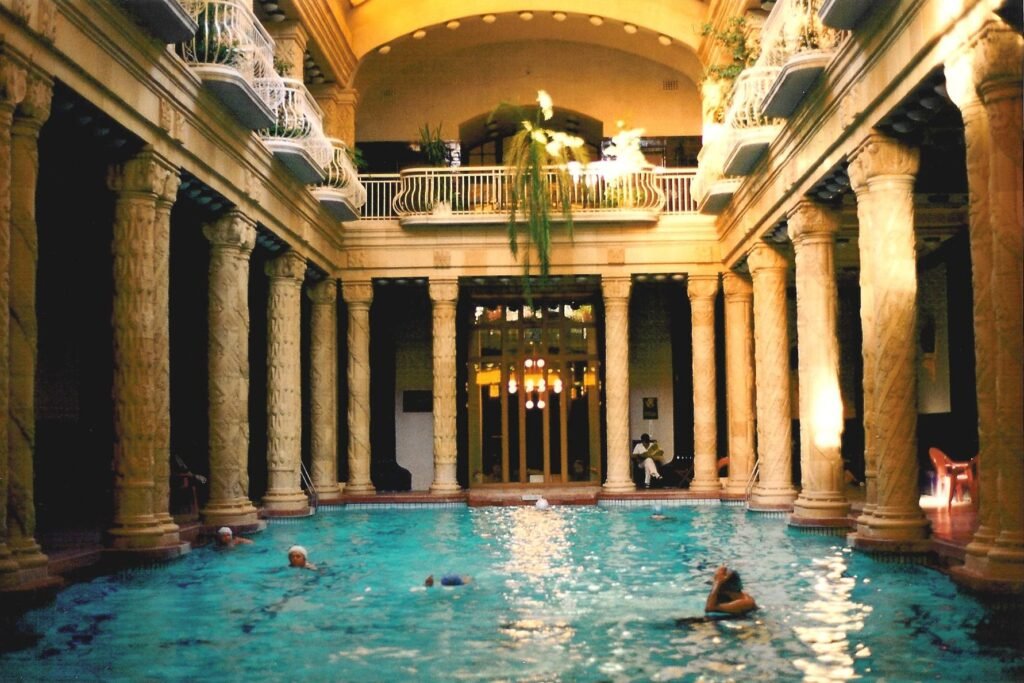
This matters because Gellért was the bath most often recommended to first-time visitors for its architecture, and a lot of English-language content has not caught up. If a blog post, guidebook or tour listing is still selling you a Gellért ticket for a 2026 trip, it is out of date. The bath’s own website now points visitors to Széchenyi instead.
What to do instead: if you came for Art Nouveau glamour, Széchenyi’s Neo-Baroque halls are the closest substitute for grandeur. If you came for the quieter, locals-first feel that Gellért regulars loved, Lukács is the better swap — see the section below.
How much do Széchenyi and Rudas cost in 2026?
A full day costs 12,000–16,000 Ft at either bath, and the day of the week matters more than the bath you pick. Széchenyi is 13,200 Ft Monday to Thursday and 14,800 Ft from Friday to Sunday. Rudas is slightly cheaper midweek at 12,000 Ft but slightly dearer at the weekend at 15,000 Ft. Both charge 1,000 Ft extra for a private cabin instead of a locker.
Two genuine money-savers most visitors miss:
- Széchenyi’s “Good Morning Budapest” ticket — 10,500 Ft on weekdays if you enter before 9 am. You get the outdoor pools almost to yourself, and it is the single best-value ticket in Budapest bathing.
- Rudas’ single-zone ticket — 8,000 Ft for either the Turkish bath or the wellness area on Monday, Thursday and Friday if you arrive before 10:45 am. If you only want the Ottoman pool, you are paying a third less.
Fast-track tickets exist at both (15,200 Ft and up at Széchenyi, 14,000 Ft and up at Rudas). They are worth it only on summer weekends and between Christmas and New Year, when the ticket queue at Széchenyi can run 30–40 minutes.
Book ahead: Széchenyi sells skip-the-line day tickets through GetYourGuide, usually with free cancellation up to 24 hours before. Check Széchenyi tickets and prices → Rudas works differently: no third party sells a plain skip-the-line entry ticket, so buy standard entry — and night bathing — directly from the bath. What GetYourGuide does sell for Rudas is a bath pass bundled with a three-course meal at the Rudas Bistro. It costs considerably more than a bare ticket, so it is worth it only if you actually want dinner with the soak. See the Rudas bath and dinner package →
What is Széchenyi Thermal Bath actually like?
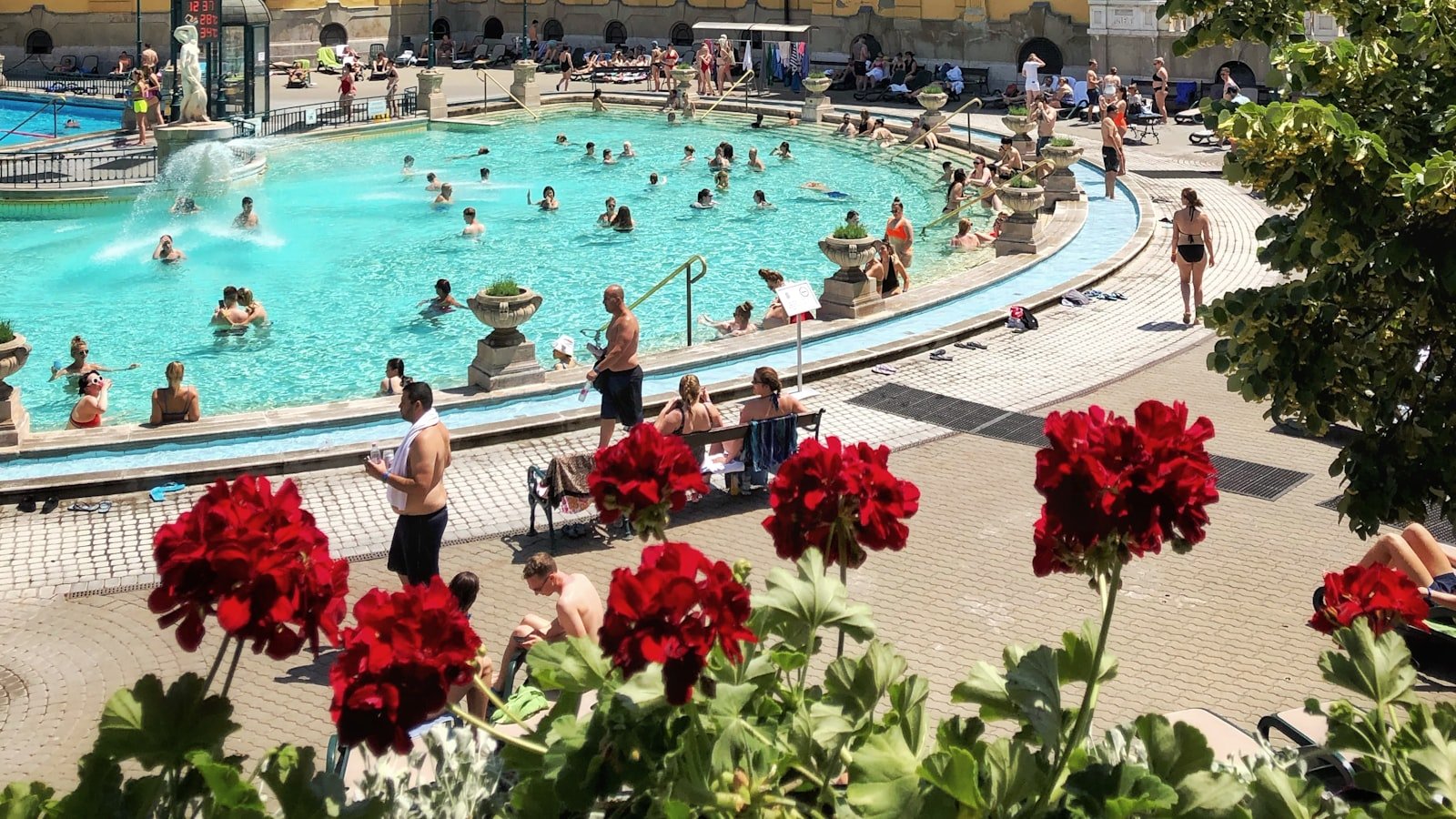
Széchenyi is the big, loud, spectacular one: 18 pools inside a mustard-yellow Neo-Baroque palace in City Park, with three large outdoor pools that stay open all winter. The outdoor thermal pool sits at 36–38 °C, the central swimming pool at 26–28 °C, and the leisure pool with its whirlpool current at 32–34 °C. Indoors you get everything from an 18 °C plunge to a 40 °C soak.
It is the bath in every photo of steam rising around men playing chess. That is the real draw, and it is genuinely worth it — but you are sharing it with a few thousand other people. Come before 9 am or after 6 pm and it is a different, far better place.
Széchenyi is also the most practical choice: it is directly on the M1 metro, it admits children, and its ticketing, lockers and signage are the easiest to navigate if you have never been to a Hungarian bath. Our complete Széchenyi Baths guide covers the layout, the cabin-vs-locker decision and the massage add-ons in detail.
What is Rudas Bath actually like?
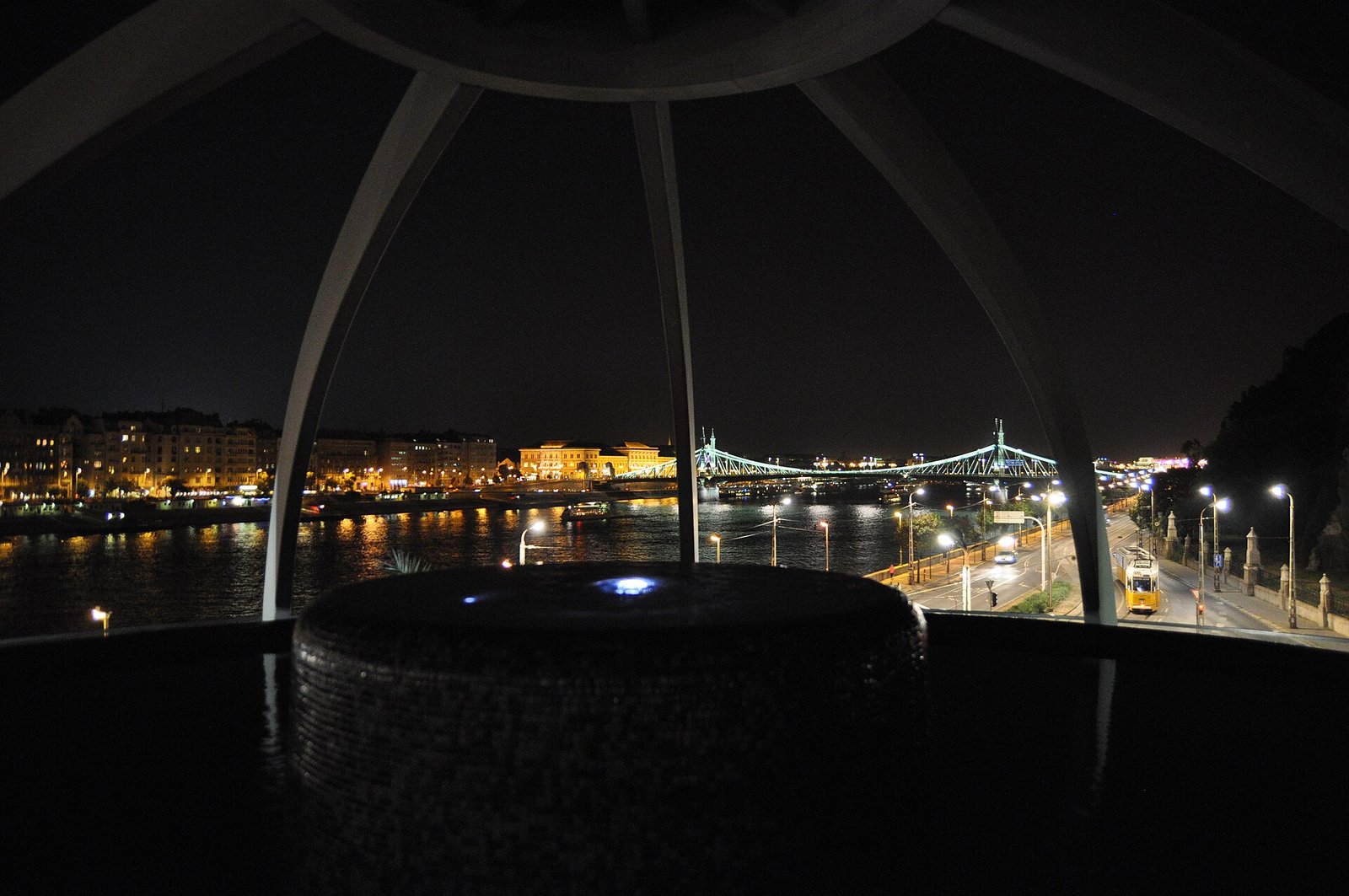
Rudas is the atmospheric one: a working Ottoman bath from the 1550s, with a domed octagonal pool lit by coloured glass, four corner pools, and a rooftop hot tub at 36 °C looking straight down the Danube at the Parliament. Temperatures range from an 11 °C cold plunge to a 42 °C thermal pool, and the swimming pool sits at 29 °C.
Rudas is quieter, darker and considerably more adult — no one under 14 is admitted. That constraint is exactly why couples prefer it.
The one thing to plan around is the gender schedule in the Turkish bath section: Tuesday is women only, Wednesday is men only, and on Monday, Thursday and Friday the Turkish bath is men only until 11 am before turning mixed. Weekends are mixed all day. The rooftop and wellness areas are mixed throughout, so a couple visiting on a Wednesday can still share the panorama pool — just not the historic one. Our 2026 Rudas Baths guide sets out the full weekly timetable and what your ticket still opens on a single-sex day.
Which bath is best for a first-time visitor?
Széchenyi, without much hesitation. It delivers the image most people have in their head when they picture Budapest bathing, it is the easiest to reach and use, and its scale means there is always somewhere to sit even when it is busy. If you have one bath visit in your trip and you want the classic experience, this is it.
Choose Rudas over it only if you already know you dislike crowds, or if the historic architecture matters more to you than the outdoor pools. Read our thermal bath etiquette guide before you go — the flip-flop and cap rules catch out a lot of first-timers, and our ranked guide to the best thermal baths in Budapest covers the wider field.
Which bath is best for couples and night bathing?
Rudas, and it is not close, because it is the only one of the three that offers night bathing. Friday and Saturday from 10 pm to 3 am, Rudas opens for mixed night sessions at 15,000 Ft, sold online only and typically gone by Thursday in summer. The rooftop pool at night, with the city lit up on the far bank, is the best hour anyone spends in a Budapest bath.
The under-14 rule also means no children in the water at any hour, which makes even a daytime Rudas visit calmer than Széchenyi ever gets. If you are staying nearby, our where to stay in Budapest for thermal baths guide covers the Gellért Hill and Downtown hotels within walking distance.
Which bath is best for photos?
Széchenyi for the wide shot, Rudas for the view. Széchenyi’s yellow façade, symmetrical outdoor pools and winter steam are what fill Instagram, and the outdoor courtyard is the only place in the city you get that composition. Rudas gives you something rarer: the Danube, the Parliament and Buda Castle framed from a rooftop pool.
Note that both baths restrict photography in changing areas and around other bathers, and Rudas’ interior is genuinely dark — phone photos of the Ottoman pool rarely come out well.
Which bath is the best Gellért substitute?
Lukács Baths, at 7,000 Ft on weekdays and 8,000 Ft at weekends — roughly half the price of Széchenyi. Lukács is where Budapest locals actually go: a working medicinal bath in Buda with a sauna world (1,300 Ft extra), a wall of marble plaques from grateful patients, and almost no tour groups. Opening hours are 7 am–7 pm daily, with a late Tuesday until 10 pm.
It is not glamorous and the facilities show their age, but it fills the gap Gellért left better than anything else in the city: unhurried, medicinal, and priced for people who come every week. Seniors and students pay just 3,800 Ft on weekdays, and there is a 3,800 Ft afternoon ticket for the last two hours on weekdays.
How do you get to each bath?
Széchenyi is on the M1 (yellow) metro at Széchenyi fürdő, about 10 minutes from Deák Ferenc tér; Rudas is at the Buda foot of Elizabeth Bridge, served by the M4 metro at Szent Gellért tér and trams 19, 41 and 56. Both are inside the standard BKK fare zone, so a single ticket or a travelcard covers the trip.
If you are fitting a bath into a tight schedule, our Budapest 3-day itinerary slots Széchenyi into day one and leaves the Rudas night session for Friday. For the wider picture of when to come, see our thermal baths in Hungary guide.
Frequently asked questions
Is Gellért Baths open?
No. Gellért Baths closed on 1 October 2025 for a full renovation and is scheduled to reopen in 2028. The Hotel Gellért has been closed since November 2021 and is being renovated at the same time.
Is Széchenyi or Rudas better?
Széchenyi is better for first-time visitors, families and the classic outdoor-pool experience. Rudas is better for couples, historic architecture, Danube views and night bathing. Széchenyi is cheaper midweek; Rudas is cheaper if you only want one zone in the morning.
Can you visit Rudas as a couple?
Yes, but check the day. The Turkish bath is women only on Tuesday and men only on Wednesday, and men only until 11 am on Monday, Thursday and Friday. The rooftop panorama pool and wellness area are mixed at all times, and weekends are fully mixed.
How much is a Budapest thermal bath ticket in 2026?
Expect 12,000–16,000 Ft for a full day at Széchenyi or Rudas, and 7,000–8,000 Ft at Lukács. Early-morning tickets bring Széchenyi down to 10,500 Ft on weekdays.
Do you need to book thermal bath tickets in advance?
Not usually on winter weekdays. Do book ahead for summer weekends, the Christmas–New Year period, and always for Rudas night bathing, which is sold online only and regularly sells out.
Which Budapest bath is cheapest?
Lukács, at 7,000 Ft on weekdays — around half the price of Széchenyi, with a locals-first atmosphere instead of a tourist one.